
Professional bike fitting
Bike Fitting
Unlock your next level of performance with a professional fit from Brisbane's most experienced fitting studio.
Fit first. Ride better.
Here at Brisbane bicycle service we take bike fitting as seriously as you do. By pairing 35 years of racing expertise with state-of-the-art, computer-assisted diagnostics, we tailor every frame choice to your exact body and riding style. Our mission is simple: zero pain, zero discomfort. Riding a bike should be pure joy—never an day in suffering.
We can always help you source the combination of geometry specification and riding position that is right for you — whether you're a weekend warrior or a competitive racer.
We listen to your body — everyone is unique. A proper fit prevents injury, maximises power transfer, and transforms your riding experience. Don't buy a bike before you've been fitted.
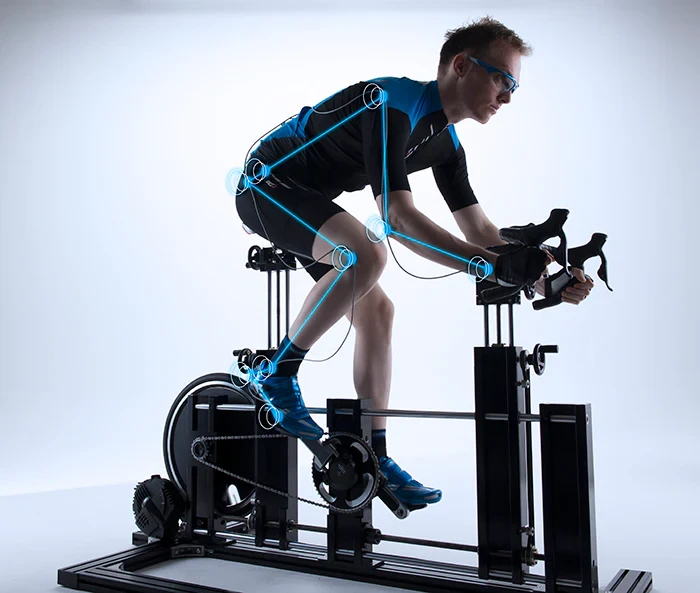
Pain & Injury Prevention
Five reasons you need a bike fit
Wondering why you would need a bike fit? Here are 5 reasons that will explain how it can help you.
To optimise your cycling experience
Regardless of the type of cyclist you are or how fit you are, a bike fit will increase the size of your smile when you're riding. We believe that achieving optimal performance, comfort and increased self-confidence whilst riding is what every cyclist should aim for.
To increase your comfort
The main goal of a bike fit is to increase your comfort on the bike. A well-fitted bike is crucial if you want to ride better, longer or faster. Despite cycling being one of the toughest sports around, injuries are relatively rare — providing your position is aligned with your flexibility and physical characteristics.
To improve your performance
All cyclists would like to ride faster with less effort. A bike fit helps you apply power to the pedals more efficiently and improve your pedalling stroke. During a fit you also learn about your body — physical imbalances, flexibility, symmetry — all of which lead to the perfect position on a bike.
To gain more self-confidence
Knowing exactly which size bike, handlebar and saddle you need means you'll feel more self-assured when buying new equipment. You'll notice greater control and pedalling efficiency — which builds confidence when cornering, braking, accelerating and sprinting.
To increase the enjoyment in your life
A bike fit will increase your enjoyment both on and off the bike. Less pain or discomfort means more fun whilst riding and less chance of injuries in the short and long term. Please be aware that a bike fit does not replace treatment from a medical specialist for specific injuries.
Select your discipline to learn more
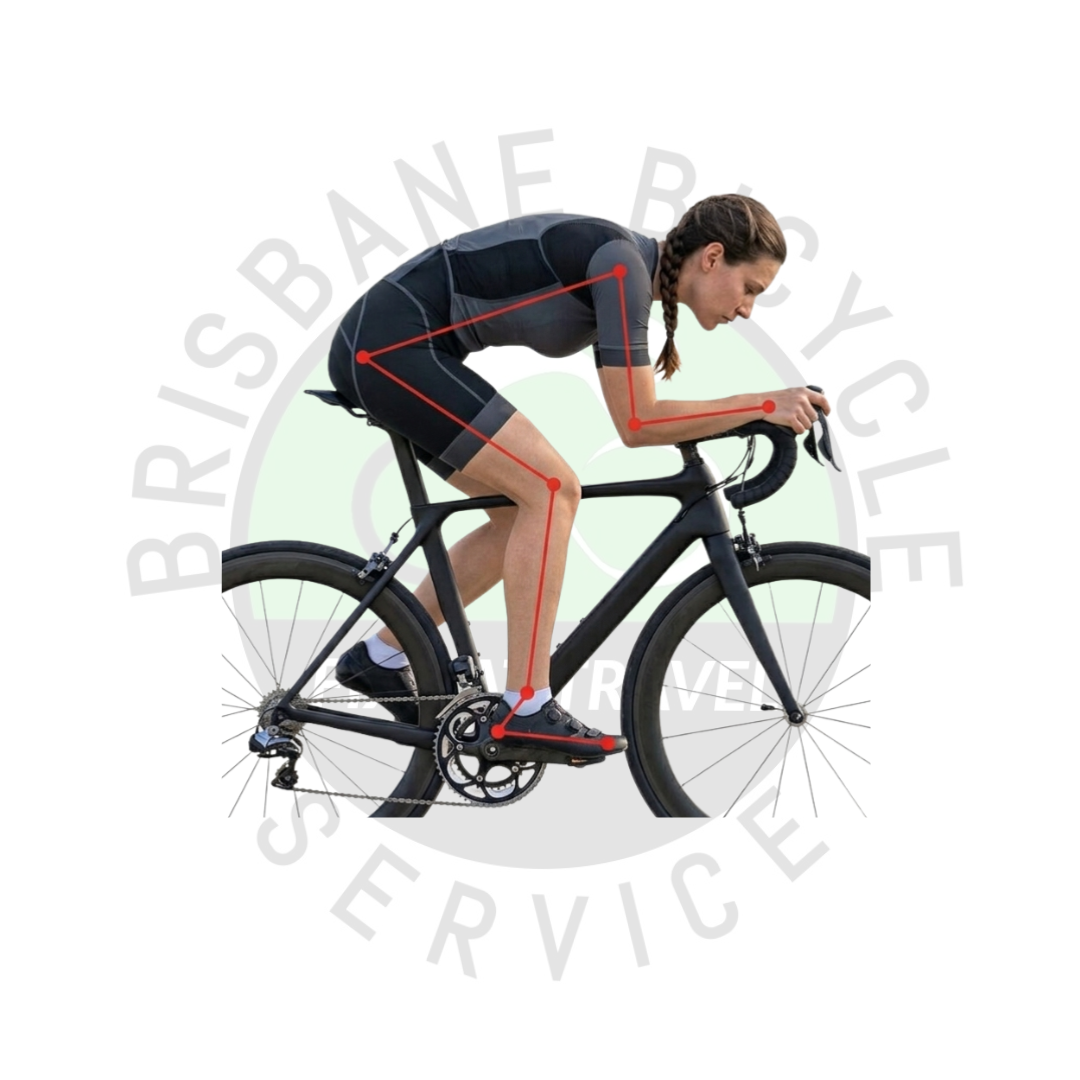
Neck
Stiffness, soreness and tension at the base of the skull and cervical spine — especially on longer rides or after climbing.
When the handlebar is too low or too far away, the neck is forced into sustained hyperextension just to see the road ahead. Over time this compresses the cervical vertebrae and strains the posterior neck muscles.
Shoulders & Arms
Aching shoulders, tight traps and a locked-up upper back. Arms may feel fatigued well before the legs.
Excessive reach tightens the shoulder girdle and transfers upper-body weight directly into the arms. Riders often compensate by locking their elbows, which transmits every road vibration straight into the shoulder joint.
Hands & Wrists
Numbness, tingling or a burning sensation in the palms and fingers — particularly in the ring and little finger (ulnar nerve territory).
Excessive forward weight bias loads the hands beyond what the soft tissue can tolerate. Carpal tunnel-like symptoms are common and are almost always positional, not structural.
Lower back
Dull ache or sharp pain across the lumbar region, often worsening after 45–60 minutes in the saddle.
The lower back is the most commonly reported pain site in cyclists. A saddle that is too low, too far forward, or tilted incorrectly causes the pelvis to rock and the lumbar spine to flex repeatedly under load — a pattern that leads to disc stress and muscle fatigue.
Hips
Visible rocking of the pelvis side to side, hip flexor tightness, or a pinching sensation at the front of the hip at the top of the pedal stroke.
Hip rocking is a classic sign that the saddle is too high — the pelvis drops to reach the pedal at the bottom of the stroke. Hip impingement indicates the opposite: the saddle is too low, compressing the hip flexors at the top of the stroke.
Knees
Pain at the front of the knee (patella tendon), behind the knee, or on the outer or inner side of the joint.
According to Bikefitting.com, knee pain is one of the most frequent cycling overuse injuries and is almost always positional. Anterior pain points to a saddle that is too low; posterior pain to one that is too high. Lateral or medial pain typically indicates cleat misalignment causing the knee to track outside its natural plane.
Feet & Cleats
Hot spots under the ball of the foot, arch pain, numbness in the toes, or a burning sensation across the forefoot.
Cleat position is the most overlooked contact point in cycling. When the cleat is positioned too far forward, too far back, or at the wrong rotational angle, the metatarsal heads bear uneven pressure with every pedal stroke. Shoe stiffness and pedal float also play a role in transmitting rotational stress up through the ankle and into the knee.
How often should you get a bike fit?
After any new bike, after an injury or big change in flexibility or riding volume, or when a new niggle appears.
A stable, comfortable position on the same bike does not need an annual redo.
Let's book your bike fit
Ready to ride better, longer and with less pain? Book your fitting session with our specialist today.
Pricing
Fitting packages
Choose the programme that suits your goals. All packages are conducted by appointment only.
Basic Fit
$1501 appointment
A thorough entry-level fit covering all key contact points. Ideal for new riders or those wanting a quick position check on an existing bike.
- Saddle height and fore/aft adjustment
- Cleat alignment and float setting
- Handlebar reach and drop assessment
- Riding position review
- Written fit report
Static Fit
$3503 appointments
A comprehensive road bike fit using computer-assisted motion analysis. Covers all contact points with detailed biomechanical assessment.
- Full biomechanical assessment
- Computer-assisted motion capture
- Saddle, cleat and handlebar optimisation
- Frame geometry consultation
- Component recommendations
- Detailed written fit report
- 30-day follow-up check
Dynamic Fit
$6005 appointments
Our most popular fit for serious riders. Combines full motion capture with pressure mapping and an in-depth biomechanical analysis across five sessions.
- Everything in Static Fit
- Saddle pressure mapping
- Two full fitting sessions
- Aerodynamic position assessment
- Dynamic pedal analysis, correction and improved pedal stroke
- Component and upgrade recommendations
- 60-day follow-up support
Elite Fit
$1,0006 appointments
The ultimate fitting programme for competitive and elite riders. Six full sessions with comprehensive motion analysis, pressure mapping, and ongoing support.
- Everything in Dynamic Fit
- Three full fitting sessions
- Full body flexibility and strength screening
- Custom insole assessment
- Aerodynamic optimisation
- Power output analysis
- Unlimited follow-up support for 90 days
- Priority booking
Optional add-on
Saddle Pressure Mapping
Add pressure mapping to any fit package. We use advanced pressure mapping technology to identify hot spots and optimise saddle choice and position for maximum comfort and power.
Pricing notes
- —All fittings are by appointment only. Please contact us to book your session.
- —Labour cost will be charged if we need to change parts
- —If you purchase a new bike through Brisbane Bicycle Service, a Static Fit is complimentary.
- —Follow-up adjustments within the stated period are included at no extra charge.
What to expect
The fitting process
Every fit at Brisbane Bicycle Service follows a structured, multi-stage process. We don't make isolated adjustments — we work through each contact point in the correct order so every change is informed by what came before it.
Consultation
Consultation
We begin with a detailed conversation — not a quick form. We want to understand your riding history, your goals, any injuries or discomfort you've experienced, and the type of riding you do most. We'll ask about your current bike, your kit, your training load, and anything that's been bothering you on the bike. This conversation shapes everything that follows. Please bring your current bike and cycling kit to every session.
Off-bike assessment
Off-bike assessment
Before we touch the bike, we assess you. A full biomechanical screening evaluates your flexibility, joint range of motion, muscular strength, and any structural asymmetries that may influence your position. We look at hip mobility, hamstring and quad flexibility, spinal range, shoulder mobility, and foot and ankle mechanics. This off-bike picture tells us what your body can and can't do — and what your position needs to accommodate.
On-bike analysis
On-bike analysis
With the assessment complete, we put you on the bike and observe. Using computer-assisted motion capture, we record your movement patterns across all three planes — sagittal, frontal, and transverse. We look at knee tracking, hip rock, spinal position, shoulder and elbow angles, and foot mechanics through the pedal stroke. This stage reveals what's actually happening when you ride, not just what looks right from a static position.
Contact point adjustment
Contact point adjustment
Working from the ground up — cleats first, then saddle, then handlebar — we make systematic adjustments to each contact point. Cleat position and float are set to support natural foot tracking. Saddle height, fore/aft position, and tilt are dialled in to optimise hip extension and reduce unnecessary load on the knees and lower back. Handlebar height, reach, and drop are then adjusted to support a sustainable upper body position. Each change is assessed on the bike before moving to the next.
Fit report & follow-up
Fit report & follow-up
At the end of your session you receive a detailed written fit report documenting every measurement and adjustment made. This report is yours to keep — it's useful if you buy a new bike, travel with your bike, or need to rebuild your position after a service. Follow-up sessions are included within the stated period to fine-tune your position as your body adapts. Most riders notice the biggest changes in the weeks after a fit, not just on the day.
Have questions about bike fitting?
We've answered the most common ones in our dedicated FAQ page.
Book your bike fit
Stop riding in the wrong position. Book a professional fit and feel the difference from your very first ride.
Book a fitting